AES-451
Fireproof writing in an age of national and transnational digital repression
For many writers, working on human rights, equality, or corruption now means working under systems of repression where digital channels are used to cause real-world harm.
AES-451 is a book project. It brings together writers and cultural workers who have experienced digital repression inside repressive systems, as well as those who have left and continue their work from Norway. Through their accounts, the project explores how digital technologies enhance systems of repression — and how the tools writers rely on to publish, communicate, organise, and reach readers can also be turned against them.
Norway has a strong tradition of protecting freedom of expression and offering refuge to writers at risk. But authoritarian regimes increasingly reach across borders, eroding these spaces of safety and continuing to pressure people even after they have left.
Why AES-451?
AES-256 is a widely used encryption standard that helps secure communication across the internet. It represents the technologies people rely on to protect privacy and expression.
451 refers to Fahrenheit 451, a novel about censorship and the destruction of books.
What is Digital Repression
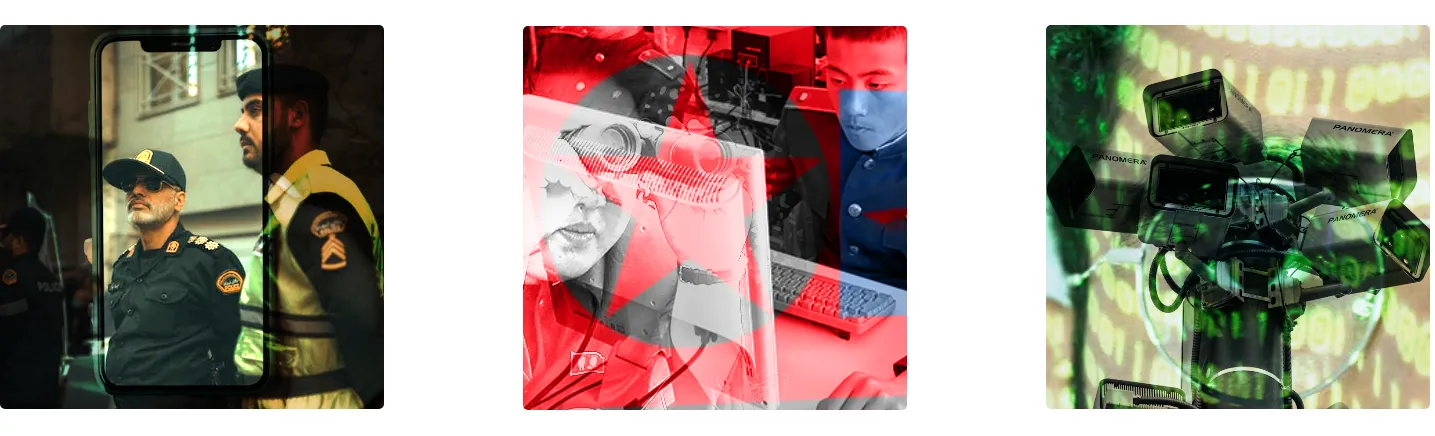
Inside repressive regimes, digital repression is not separate from other forms of control. It extends familiar methods of repression through new systems. For states and their proxies, digital technologies offer new ways to monitor, infiltrate, disrupt, intimidate, and discredit writers. For writers, the same technologies that allow their work to travel further also create new vulnerabilities — ways to silence them, expose them, or put them and those they love at risk.
Through direct control over digital infrastructure, activists can be traced, contacts identified, private messages exposed, and families threatened or punished for things written online. Phones can be confiscated and people forced to unlock them. Online attacks can lead to cancelled events, damaged reputations, lost work, arrest, detention, torture, or worse.
But these pressures no longer stop at national borders.
Exile can give writers distance, visibility, and new freedom to speak. It can also make them more threatening to the regimes they have left behind.
As diaspora communities become powerful political actors, authoritarian states adapt. They extend their mechanisms of control across borders, using digital systems to monitor, intimidate, discredit, isolate, and silence critics abroad.
Many writers find that exile does not bring safety. The same dynamics continue in new forms — through coordinated harassment, automated reporting, leaked private messages, surveillance of online networks, reputational attacks fuelled by manipulated media and AI-generated material, and the infiltration or manipulation of diaspora spaces.
This is just about technology. It is about people and communities.
This repression is not usually highly technical. It often moves through people: coerced intermediaries, informal informants, and unwitting amplifiers who circulate regime-aligned narratives without necessarily understanding where they come from or whom they serve. Digital platforms make this easier by allowing regimes and their proxies to map communities, identify divisions, target vulnerabilities, and push propaganda into diaspora networks.
The result is not only direct external intimidation, but manufactured pressure inside the community itself. Writers and journalists may find themselves surrounded by suspicion, factionalism, denunciation, reputational attacks, and fear. Private groups no longer feel private. Friendships become uncertain. Political disagreements can be manipulated into campaigns of isolation and social punishment.
A smear campaign that once required co-opting print media, informants, and close human intelligence can now be built from scraped social media pages, manipulated media, and AI-generated material spread rapidly online. The methods have changed, but the effects remain familiar: fear, isolation, reputational harm, cancelled books, cancelled events, and pressure to fall silent.
Take part in AES-451
If you are a writer or creative who has experienced these kinds of pressures, we would like to hear from you.
You do not need to commit to anything. The first step is simply to get in touch.
If you know someone who may want to contribute, please feel free to share this page with them.
Email: aes451@sicpublish.no
AES-451 exists as a response to that shift.
The project documents the lived experiences of writers and cultural workers who have faced digital repression, censorship, surveillance, intimidation, platform manipulation, and transnational pressure.
Importantly, these testimonies are not collected simply as records of abuse. They form the foundation of a broader publishing and research effort exploring how writing, creativity, and freedom of expression are being reshaped by repression in the digital age.
The stories gathered through AES-451 will contribute to a future book examining national and transnational digital repression through the experiences of the people living it directly.
Forms of Digital Repression
These are some of the ways digital repression is experienced in practice — often overlapping, and often evolving over time.






Why this matters in Norway
Norway is home to many journalists, writers, and creative professionals who have left repressive — and often technologically sophisticated — regimes around the world. For many, leaving does not bring complete safety. The pressures they experienced continue in new forms, adapted to operate within more open societies. This includes forms of transnational digital repression that extend beyond borders, shaping how people live and work even after exile.
AES-451 is a book project that responds to this reality. It seeks to listen to those who have experienced these conditions — both in their countries of origin and in the environments they live in now, including Norway. The project will form an anthology bringing together first-hand accounts from writers and creatives, documenting the many forms of digital repression and the growing reach of transnational digital repression.
This is likely to become an increasingly important issue. Addressing it requires both awareness and understanding: writers need to know how to protect themselves, and the institutions and individuals they work with need to recognise how these forms of manipulation operate in practice. Without that understanding, even well-intentioned decisions can contribute to limiting expression.